Sonic the hedgehog soundtrack: a practical guide

Published 28 September 2026
Most people meet the Sonic music backwards. They hear a remix, a live orchestral arrangement, or a track from a later game, and only then go looking for where it came from. The result is a listening list that jumps between consoles, composers and regional releases with no thread holding it together.
This guide fixes the order. You will get a short, playable path through the Sonic the Hedgehog soundtrack, roughly two hours of listening, plus the context that makes each era sound different. No prior knowledge needed. A pair of headphones and a streaming app are enough.
What you need before you start
The Sonic catalog spans 1991 to the present, several composers, and at least three hardware sound chips. That variety is the fun part, but it also means you should decide up front what you are listening for.
- A streaming service, most Sonic albums are available, though regional gaps exist.
- A note-taking app or a text file, track names are easy to lose across so many releases.
- Headphones, the early tracks lean on stereo panning and bass lines that laptop speakers flatten.
- Patience with re-releases, the same track can appear under two or three different album titles.
Get those in place and the rest is just sequence.
The short version
If you only have one evening, listen in this order: the 1991 original, then Sonic CD, then Sonic 2, then Sonic 3. That sequence follows the actual evolution of the sound rather than release dates alone, and it makes the jump in production quality obvious.
| Release | What changed | Listen for | Rough length |
|---|---|---|---|
| Sonic the Hedgehog (1991) | Established the bright, fast melodic style | Short loops that never feel repetitive | Under 20 min |
| Sonic CD (1993) | Two regional soundtracks for one game | How the same stage changes mood | 40-60 min |
| Sonic 2 (1992) | Denser bass and stronger percussion | Rhythm carrying the melody | 25-35 min |
| Sonic 3 (1994) | Longer, more layered arrangements | Instrument variety within one stage | 35-45 min |
Start with the first row tonight and the rest of this guide will make more sense.

Photo: Pixabay · Pexels
How we picked these
Three criteria decided the order: historical influence, how clearly each release shows a technique you can hear, and whether it is easy to find legally today. Popularity alone did not qualify anything.
Historical influence matters because the 1991 score set a template that dozens of platformers copied. A track that shaped a genre teaches you more in three minutes than a technically impressive one nobody followed.
Audibility is the second filter. Sonic CD earns its place not because it is the most famous, but because it lets you compare two completely different approaches to the same stages, a rare chance to hear how composition choices, not just hardware, change a game's identity.
Availability is the third. Every entry here can be streamed or bought without hunting through fan archives, so you can actually finish the list. That sounds trivial until you try to assemble a playlist from out-of-print discs.
Sonic the Hedgehog soundtrack: where it starts
The 1991 score is built on short, hooky phrases that repeat with small variations. That structure exists for a practical reason: early console hardware had limited memory, so composers wrote compact loops and let repetition do the work.
What makes it hold up is restraint. Each stage theme picks one melodic idea and commits to it, then shifts the bass or the percussion underneath to keep the ear interested. Listen to how often the melody stays still while everything below it moves.
serp_errorThis is also the release that explains why the series is associated with speed. The tempo is high, but the phrasing is what sells it, notes land slightly ahead of where you expect, which reads as momentum.
If you want the wider context of how this era fits into game music as a whole, our guide to the best video game soundtracks places it alongside its contemporaries.
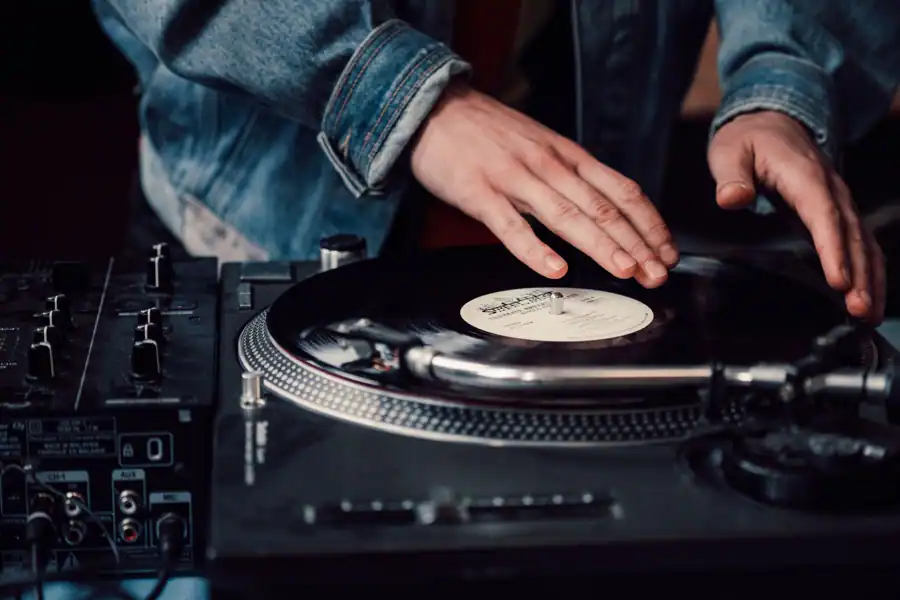
Photo: Jan Kopřiva · Pexels
Sonic the Hedgehog CD soundtrack: the two-version problem
Sonic CD is the most confusing entry for newcomers, because the game shipped with different music in different regions. The Japanese and European release used one set of tracks; the North American release used another.
Neither is a downgrade. They simply aim at different moods, one leans toward polished, produced pop textures, the other toward a rawer, more atmospheric feel. The stages are the same; the emotional read is not.
This makes Sonic CD the best teaching tool in the catalog. Play one version of a stage, then the other, and you will hear exactly how arrangement and production shape a level's personality without a single change to the level design.
One warning: track listings online mix the two versions freely. Check which release a playlist is drawn from before you judge it.
Sonic the Hedgehog 2 soundtrack: rhythm takes over
Sonic 2 pushes percussion and bass to the front. Where the 1991 score used rhythm as support, this one uses it as a co-lead, the low end carries as much identity as the melody.
That shift is worth studying if you write music yourself. It shows how a sequel can evolve a sound without abandoning it: the melodic language stays recognizable, but the mix and the groove change underneath.
Listen for the drum programming in particular. The patterns are busier, and they change more often within a single loop, which keeps long stages from wearing thin.
By the time you finish this release, the next step will sound almost orchestral by comparison.
Sonic the Hedgehog 3 soundtrack: the layered peak
Sonic 3 is where the 16-bit era's arrangements get genuinely dense. Tracks stack more simultaneous parts, change instrumentation mid-stage, and use texture, not just melody, to signal a shift in the level.
Two things are happening. First, the hardware allowed more channels, so composers could write parts that would previously have been cut. Second, the team had learned to use music as pacing: a stage that starts sparse and fills in feels like it is accelerating even at a constant tempo.
That technique is the ancestor of the adaptive scoring you hear in modern games, where layers fade in and out based on what the player is doing. If that idea interests you, our breakdown of the Sonic original soundtrack traces how the approach developed across the series.
It is also the densest listen of the four. Give it a full session rather than background play.
Common mistakes when exploring this catalog
Most frustration comes from three avoidable habits.
- Starting with remixes. Arranged albums are interpretations. They are more enjoyable once you know the source material.
- Mixing regional versions in one playlist. Sonic CD in particular loses its point when the two soundtracks are shuffled together.
- Judging on phone speakers. The bass and stereo work that define these tracks simply do not survive tiny drivers.
- Assuming later means better. Each era solved a different problem with the tools it had.
Fix those and the catalog opens up quickly. From here, the natural next step is comparing Sonic's approach with other long-running series, our guide to the Mario theme music makes a good counterpoint, since both franchises built recognizable identities from very short loops.
FAQ
Which Sonic soundtrack should I listen to first?
Start with the 1991 original. It is short, it establishes the melodic language the rest of the series builds on, and it makes the later releases easier to hear clearly.
Why does Sonic CD have two different soundtracks?
The game was released with different music in different regions. Both sets are complete and intentional; they simply aim at different moods, which makes the game unusually useful for comparing production styles.
Do I need to play the games to enjoy the music?
No. The tracks are written as self-contained loops with clear melodies. Playing the games adds context, but the listening path above works on its own.
What makes the Sonic 3 soundtrack different from earlier entries?
Denser arrangements and more frequent changes in instrumentation. Earlier scores relied on a single strong hook; Sonic 3 layers several parts and shifts texture as a stage progresses.
Where does this fit in game music history?
It sits at the point where console music stopped being a technical compromise and became a stylistic choice. The techniques in these scores, looping, layering, dynamic texture, still shape how game audio is written.
More on the site
Read next
Metal gear rising soundtrack: a practical guide
The Metal Gear Rising soundtrack does something most game scores never attempt: it sings at you while you fight. Composed largely by Jamie…
Pokemon soundtrack movie: how to get started
Start with the first movie. Everything else makes more sense after it. If you have ever hummed a tune from a Pokémon film without knowing where it…

Final fantasy 7 original soundtrack: a practical guide
Four discs. Roughly eighty tracks. One composer working mostly alone at a keyboard. The Final Fantasy 7 original soundtrack is the score Nobuo…